
Technical Sheet
Duration: 65 minutes
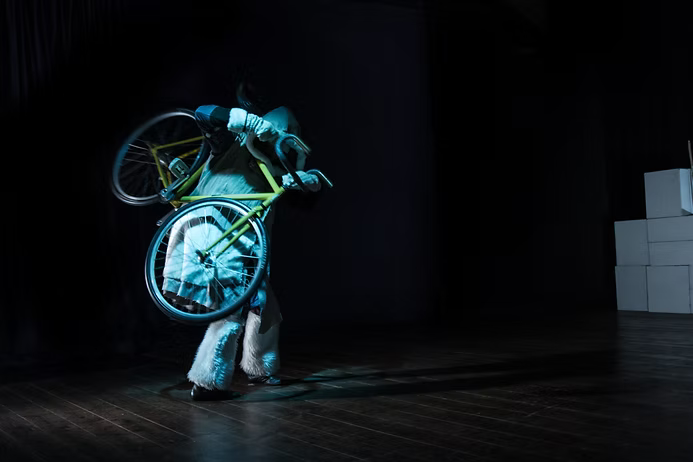
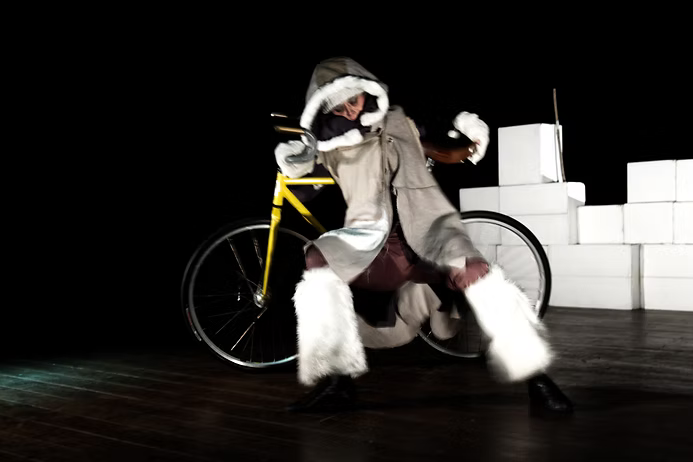
Performance elements: Acrobatic Bicycle, Rotating Trapeze
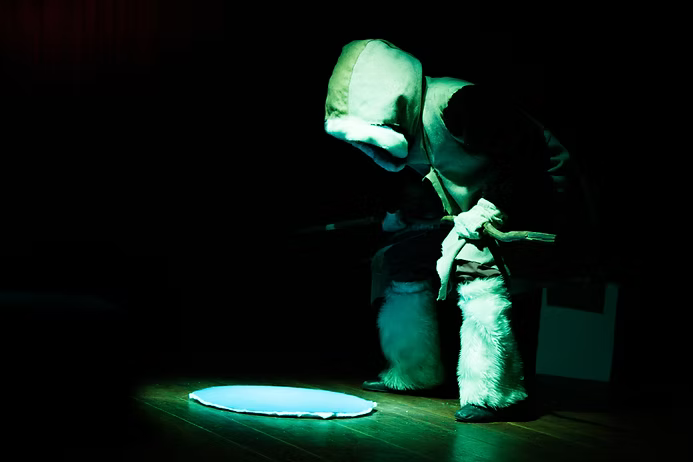
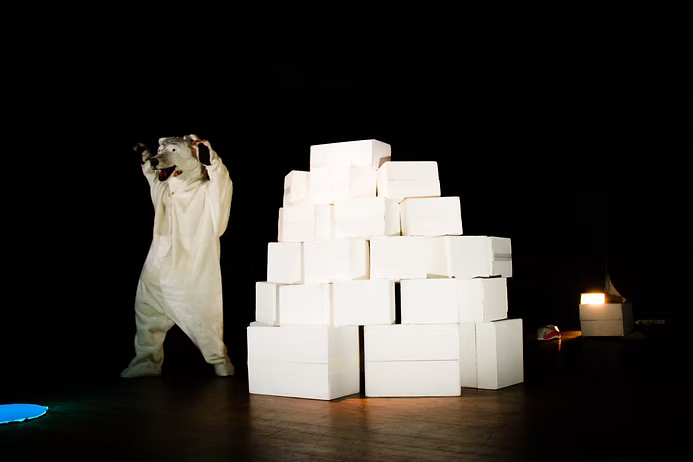
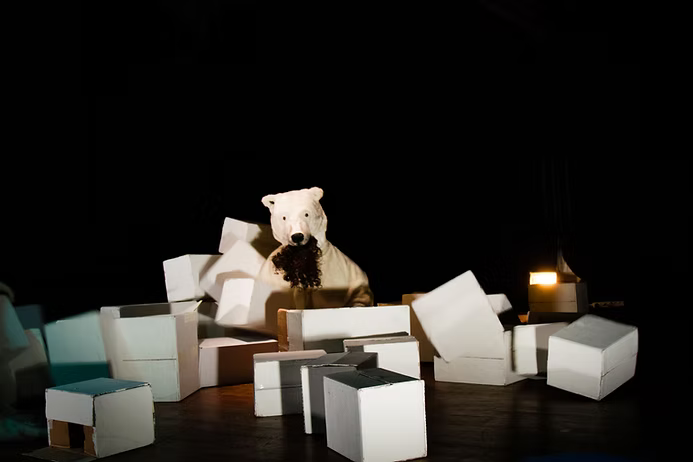
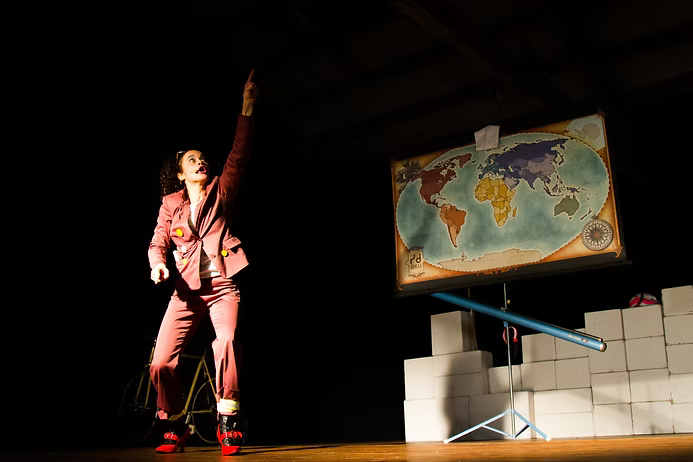
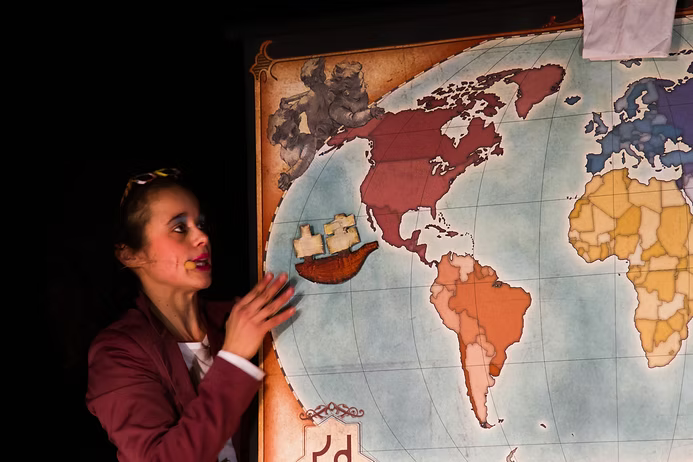
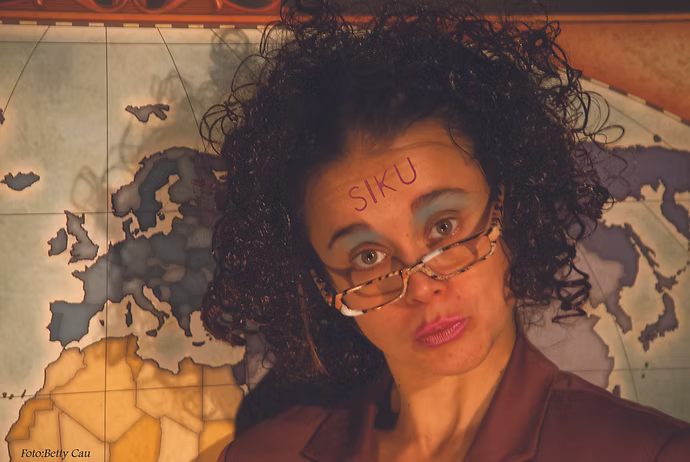
An illustrated lecture on the Arctic and the Inuit.
We revisit the era of polar exploration and local customs, bringing real experiences and adventures to life, with respect for a foreign culture and with plenty of humor and self-criticism regarding the horrors and absurdities of the “white” conquest of the “white” continent.
We break the ice and embark on this journey to learn while laughing.
Open to all audiences.
Direction: Fred Blin
Dramaturgy: Fred Blin and the actors
Artistic direction and concept: Jessica Arpin
Costumes: Trina Lobo
Performers: Jessica Arpin, Xabi Eliçagaray, Jade Morin, Mauro Paganini
Supporters
Switzerland: City of Geneva, Loterie Romande, Michalsky Foundation, Ernst Goehner Foundation, Municipality of Chêne-Bourg
Catalonia: La Central del Circ, La Bau, Teatre Espluga de Francolí, Teatre de Montmeló
Description & Purpose
The performance is based on a series of statements:
Development
The performance emerged from collective research using material gathered during my travels. There are four of us on stage: two circus artists and two musicians.
We used as sources books by explorers, anthropological texts, as well as testimonies, films, and documentaries produced by the Inuit.
After three trips to the North Pole, the idea began to take shape in my mind. This is a collaborative creation involving 10 hands. I am thrilled to have been able to bring together Mauro Paganini, Jade Morin, Xabi Eliçagaray, and Fred Blin for this adventure. Together we are creating SIKU, based on the principle of creating on stage, sharing skills, ideas, and suggestions that arise from our interactions. We collaborated with experts in their fields to support us in bringing the project to life.
Project Context
(by Jessica Arpin, founder and circus artist)
Since 2007, I have been actively collaborating with the Artcirq project, based in Iglulik, Nunavut, an Inuit autonomous region in Canada. I met co-founder Guillaume Saladin, son of anthropologist Bernard Saladin d’Anglure, during my studies at the National Circus School of Montreal.
In 2001, Guillaume and a group of Inuit founded Artcirq to offer a new vocabulary of expression in circus and music to the young Inuit of Iglulik, aiming to reduce the high suicide rate among the population.
I have traveled three times to the Far North to collaborate on the project: November 2007, August 2011, and April 2022.
These trips shook me, unsettled me, but also inspired me, enlightening and challenging me.
It has been 18 years since my first trip “up there,” and the time has come to share my “North Pole” with a European audience. My knowledge is humble, but these three Arctic experiences, along with various projects with Artcirq in France, Greece, and Canada, have enriched me greatly. This wave of sensations and meanings has given me the strength and the responsibility to create, in my own way, a work that raises public awareness with honesty and boldness.
As Ernest Shackleton said: “The polar regions leave on those who have faced the worst trials an imprint that people who have never left the civilized world can hardly explain.”
After the Performance
The performance is accompanied by a photographic, visual, and musical exhibition in the theater foyer or at the entrance, where audience members can discover Inuit literature, such as the novel Sanaaq by Inuk Mitiarjuk and the children’s book My little kulu by Celina Kalluq.