
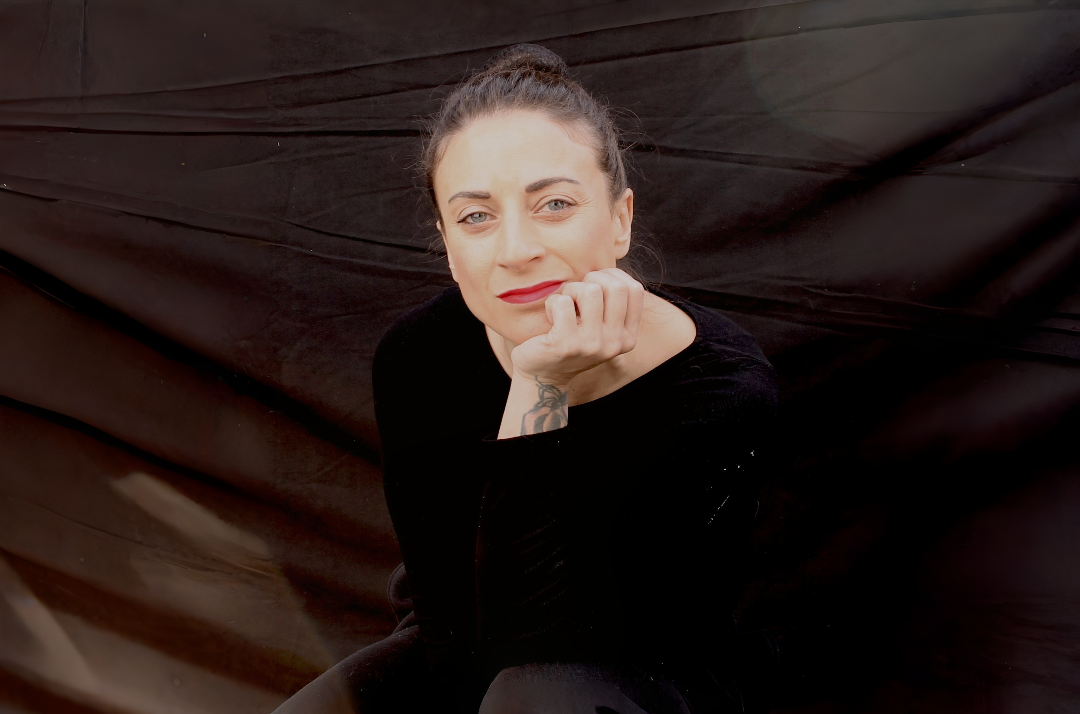
Ermilda Kotsia was born in Ofida, a small village in the Marche region (Italy), in 1984. When she was little, during car trips with her family, her favorite game was to combine the journey with her imagination to invent stories like in the movies. In 1994, she lost her father, a blacksmith and iron artist, to illness. She grew up surrounded by the love of her mother and sister, who gave her the freedom to dream and express her feelings.
She began drawing by recreating the sketches her father made for ironworking, so that at the age of 14 she decided to enroll in the Osvaldo Licini Art High School in Ascoli Piceno. There she was introduced to painting techniques and analog photography, which led her to continue her studies at the Academy of Fine Arts in Urbino.
Although she was enrolled in the Painting program, she discovered and fell in love with Body Art and Video Art, which allowed her to express herself first through the body and then through video. In the works she has created over the years, her focus on the power and fears of the human soul stands out. She graduated with honors, presenting her first short film, L’altalena, which she created alongside some classmates who volunteered to both act and work behind the camera.
Completely captivated by the seventh art, she decided to continue her studies in Rome, enrolling at the Free University of Cinema in Rome. At the end of the program, she created *Weltanshauung*, a short film that explores the loneliness of a woman trapped on the threshold between reality and fiction. Determined not to abandon the world of video, she specialized in filming techniques at the Centro Sperimentale Televisivo in Rome and chose to set aside introspection to broaden her gaze toward her surroundings.
She began to engage with social issues and, consequently, with documentary filmmaking. Together with Andrea Cottini and Davide Falcioni, she co-directed *Me Sem Rom*, a completely self-produced documentary that chronicles the final year of Casilino 900, the largest Roma settlement in Europe, which was evacuated and demolished by the Alemanno administration in 2010. At the same time, she worked as a second camerawoman on a series of documentaries filmed in Ireland, Scotland, Sweden, and South Africa and produced for a Sky TV channel.
Subsequently, as she did not feel at home in the film industry, she returned to the Marche region. While working as a waitress in a restaurant, she continued to devote herself to art and storytelling. She directed *Vivo*, an investigative documentary exploring the meaning of life through the experiences of seven people. In 2012, seeking new inspiration, she moved to Paris, where she worked as a waitress at night and spent her days editing Vivo.
After eight months, she returns to Italy and begins working as a video technician for a television station. In the meantime, she pulls the script for Senzapaura out of a drawer and decides to film it. She returns to tell the story she lived through with her father, but from a less intimate perspective, one that can speak directly to everyone. She thus portrays cancer through the dreamlike and positive eyes of a little girl.
Film and video, though intensely passionate pursuits, frequently clash with her nature during production. In 2017, through Puppet Theater and Sand Art, she found the long-sought combination of drawing and filmmaking in a world more akin to her own existence, where she is able to express herself freely and with complete naturalness.
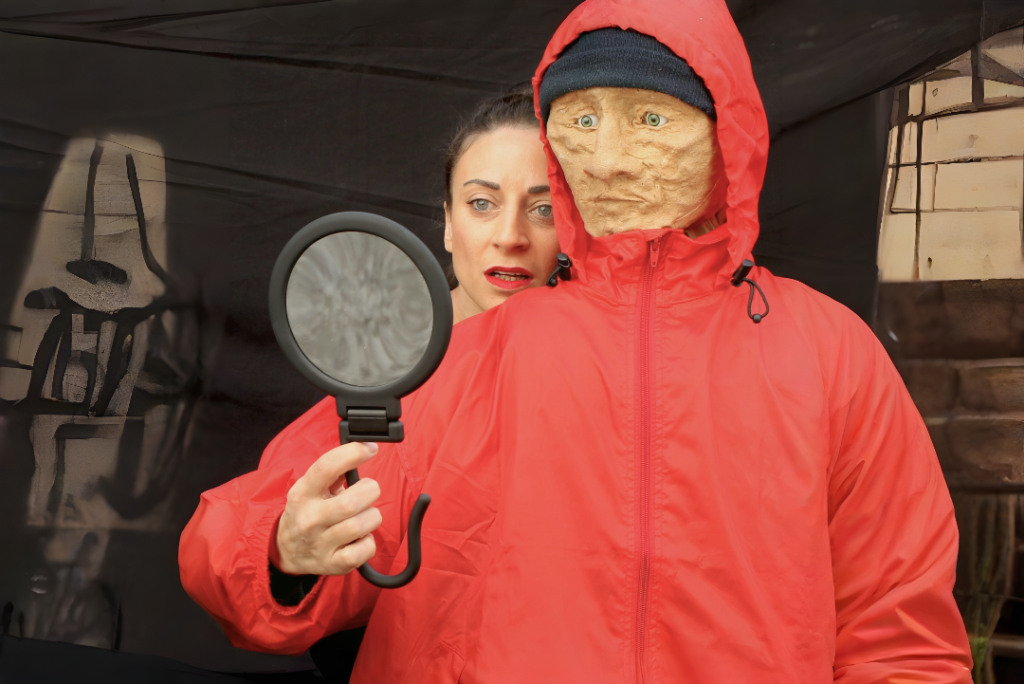
Street Performance / Puppet Theater
Poetic Performance
25 minutes |For all ages|Outdoor venues, Theaters, Schools & Cultural events
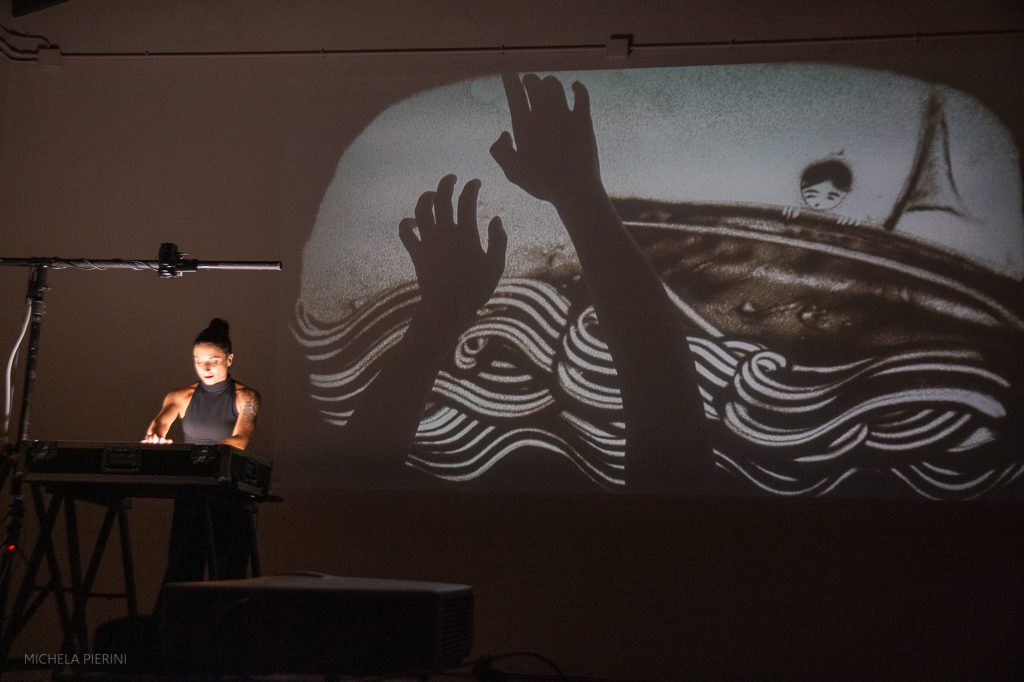
Street Performance / Sand Art
Visual Arts / Poetic Performance
20 minutes |For all ages|Outdoor venues, Theaters, Schools & Cultural events